Treat NMD
A 114-page clinical guide designed to make complex medical information accessible to families worldwide
The
challenge
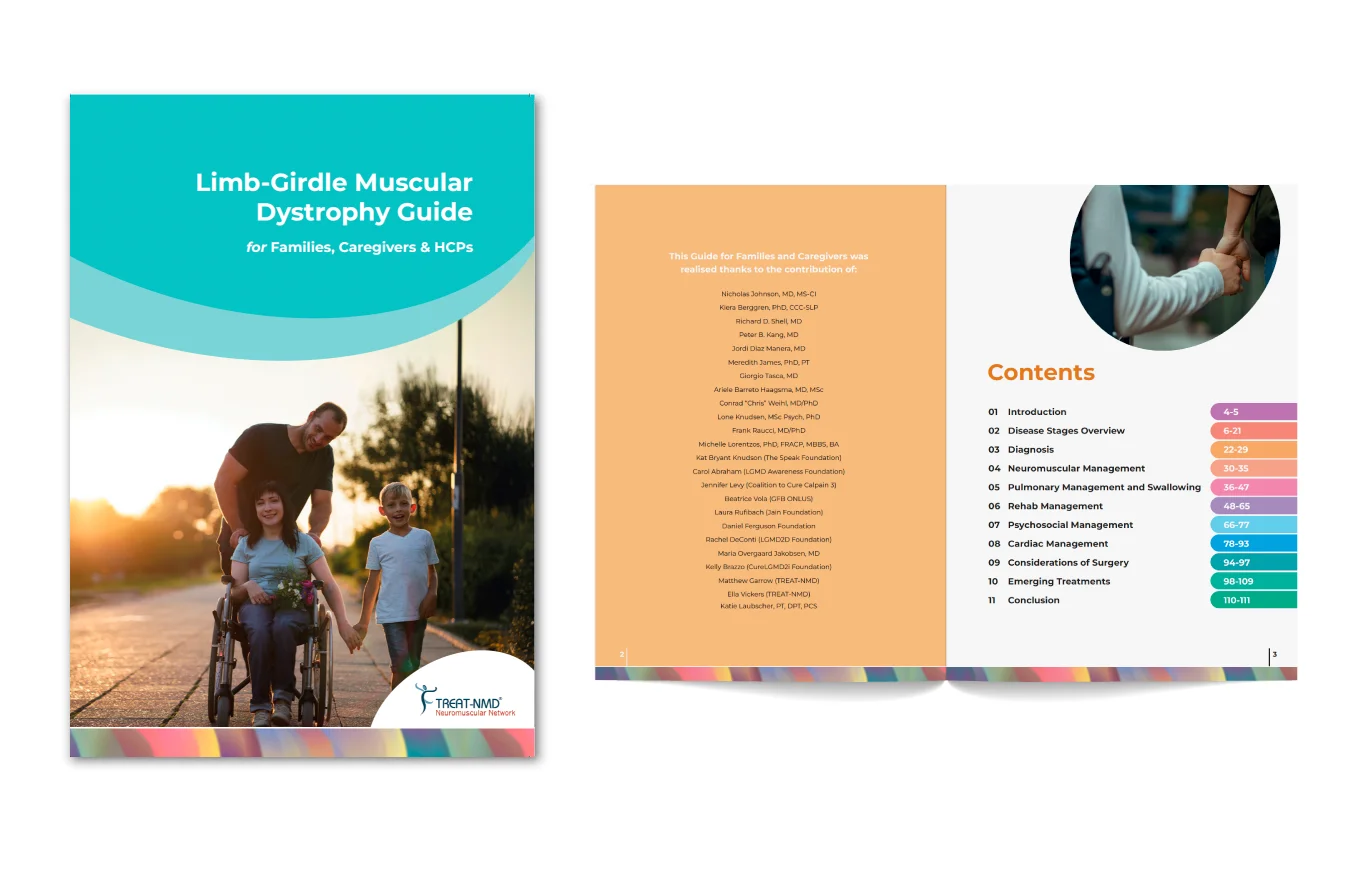
TREAT-NMD is a global network advancing diagnosis, treatment and care for people living with neuromuscular diseases, and the brief was a 114-page guide for families, caregivers and healthcare professionals supporting people with Limb-Girdle Muscular Dystrophy. This was not a marketing piece but a resource real people would turn to at some of the most difficult moments of their lives, looking for clarity, reassurance and practical guidance.
The challenge was to take a substantial volume of complex, clinically detailed information and present it in a way that felt accessible, navigable and genuinely useful, without oversimplifying or undermining the seriousness of the subject. Families and caregivers did not need another document that felt like hard work.
The design had to reduce cognitive load rather than add to it. A guide of this length needed a clear visual architecture so readers could find what they needed and understand where they were, and it had to function both as print spreads and as individual pages for digital distribution.
Our
approach
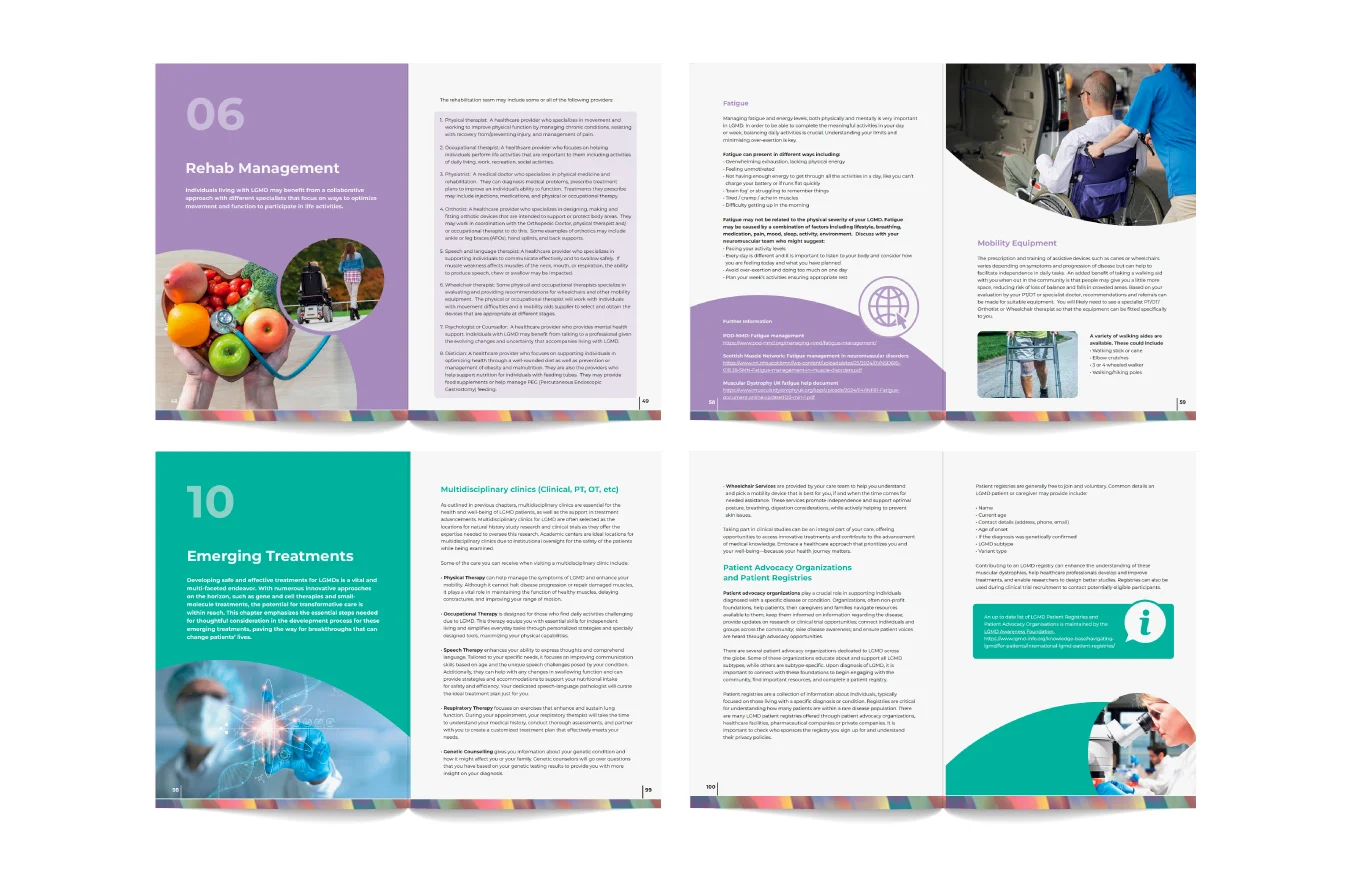
We worked closely with Matt at TREAT-NMD to bring together content from a range of clinical experts and contributors. The book was mapped out in full before design began, with placeholders used for images, diagrams, charts and infographics to ensure that visual breaks were built into the structure from the outset rather than added as an afterthought.
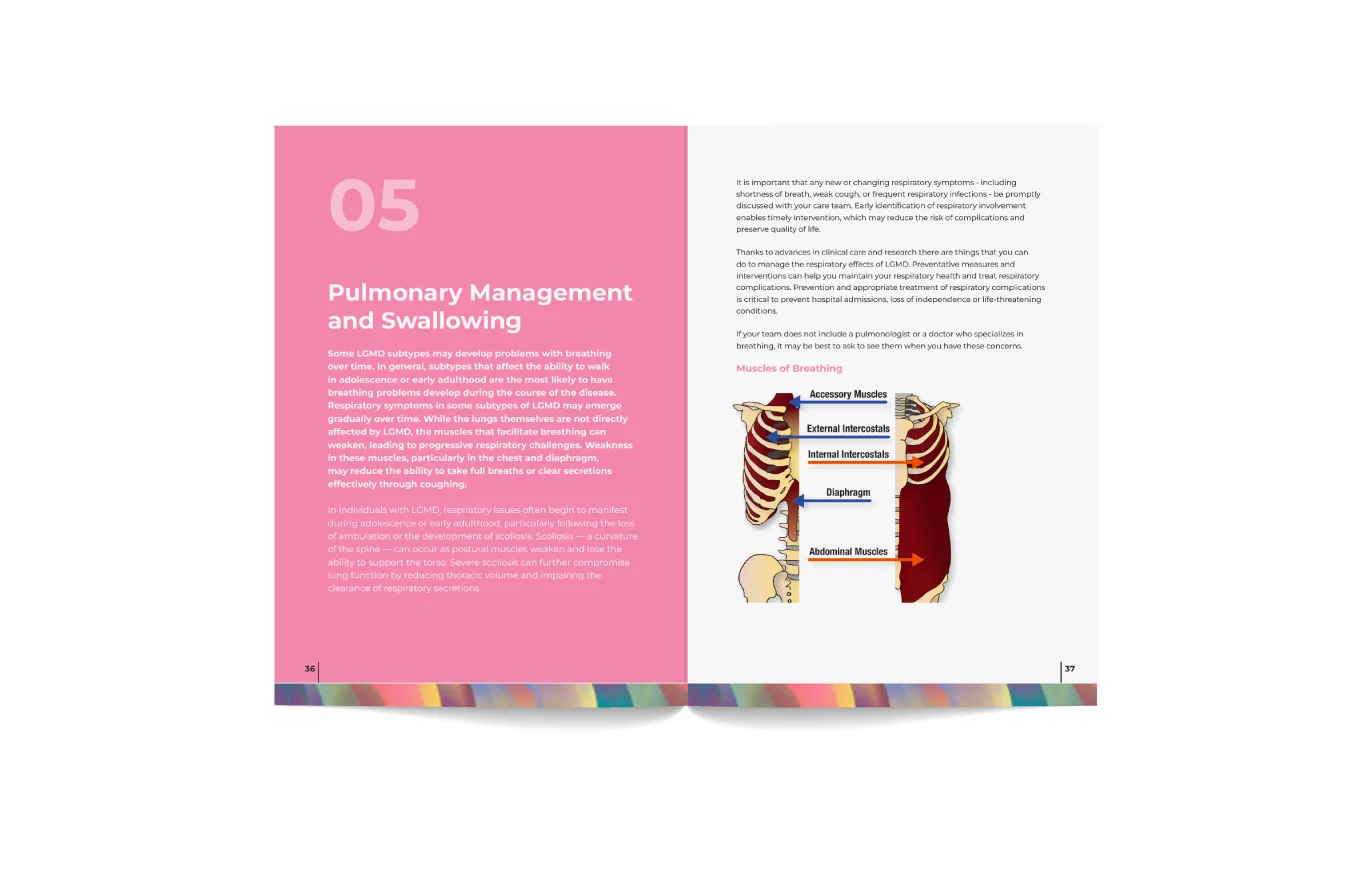
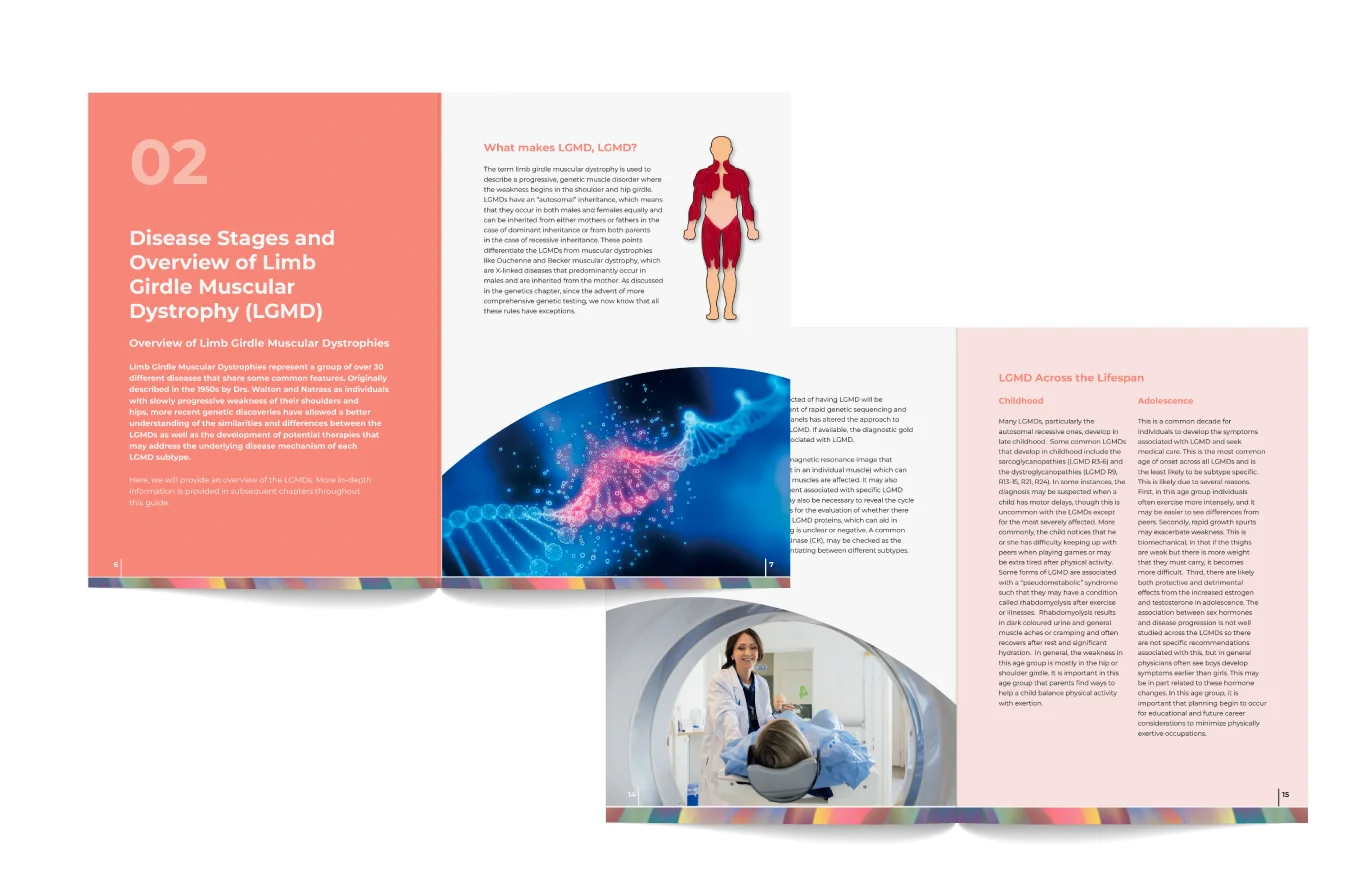
To help readers navigate a document of this length and complexity, we extended the existing TREAT-NMD brand colour palette and assigned a distinct colour to each section. This gave the guide a clear visual architecture – making it immediately easier to find relevant sections and understand where you were within the document.Every page was crafted individually, using a combination of icons, infographics, photography, diagrams and varied layouts to maintain visual interest and make dense content easier to absorb. The skill was not in making the content look decorative, but in using design to reduce cognitive load – so that readers could focus on the information itself rather than fighting their way through it.
The guide was designed to work as spreads for professional print production, but also as individual pages for digital distribution, ensuring it could be shared, downloaded and used effectively in both formats.
Services delivered
- Brochure Design
- Print Management
- Brand Development
- Website UX